

If you are an experienced welder, you know that aluminium welding is one of the most challenging and complex processes in the welding industry.
Surface preparation
Surface preparation is a critical step in aluminium welding. It is essential that the surface is clean and free of impurities to achieve a high quality weld.
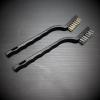
To remove the oxide layer that forms on the surface of the aluminium, a stainless steel brush or a brush with copper bristles can be used. In addition, for more effective cleaning, the use of a suitable solvent, such as acetone or isopropyl alcohol, is recommended before welding.
Selection of welding equipment
Aluminium welding requires an AC alternating current TIG welding machine to achieve a high quality weld.
The TIG welding torch should be water-cooled if it is to be used for prolonged, high-temperature welding to prevent the torch from heating up and to avoid deterioration.
This equipment is best suited for aluminium welding, as it provides a stable welding arc and precise heat control.
On the other hand, there are the filler rods, which will have to be chosen appropriately as there are many types of aluminium. The wrong choice can lead to leaks or breakage.
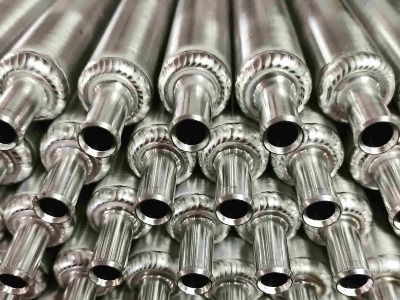
The shielding gas used in aluminium welding is also important. Pure argon gas is the most commonly used shielding gas in aluminium welding, as it provides excellent protection against oxidation. A mixture of argon and helium can also be used to further improve the quality of the weld.
Welding process
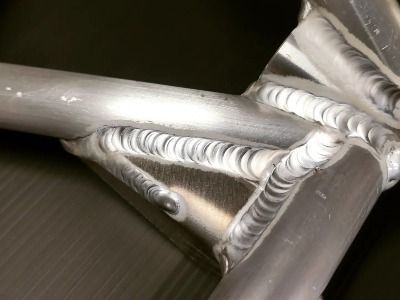
The TIG welding process is commonly used in aluminium welding because of its high quality and precise heat control.
During the TIG welding process, a welding torch is used to heat the workpiece and melt the aluminium welding rod into the weld joint.
It is important to adjust the current of the machine to avoid overheating and to minimise deformation of the workpiece.
In addition, the speed of the welding rod and the displacement of the welding torch should be paid attention and well synchronised in order to achieve a uniform and durable weld.
The temperature of the workpiece must be monitored, as the temperature of the material in aluminium is not as visible as in other metals.
Aluminium alloys
Aluminium alloys have different welding properties and it is important to select the correct alloy for the job and adjust the welding process accordingly.
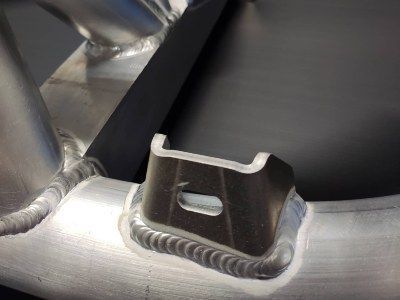
For example, aluminium alloys with high magnesium content may be more prone to crack formation during the welding process. In this case, special attention should be paid to the cooling rate of the workpiece and the control of the welding current to avoid stress cracking.
Conclusions
In conclusion, aluminium welding requires special attention to surface preparation, selection of the right welding equipment, welding process and selection of the correct aluminium alloy. It is important to follow these steps carefully to achieve a high quality and durable weld.
We hope this article has been helpful for those looking to learn more about aluminium welding.
Always remember to follow proper safety precautions and use the necessary personal protective equipment when welding. It is always advisable to consult an aluminium welding expert for any major welding project - good luck on your next aluminium welding!